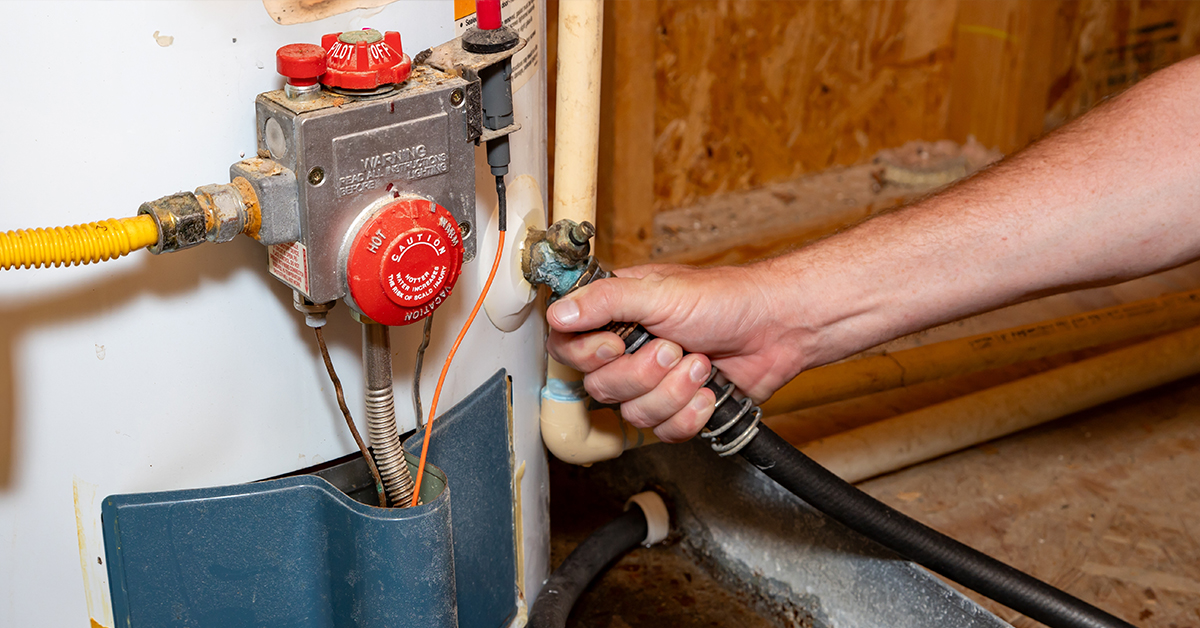
You probably only think about your water heater when you get a surprise cold shower or run out of hot water while doing the dishes. But this essential part of your home is important, and can also be a large investment, so we put together some important information you need to know as a homeowner.
What Are the Main Types of Water Heaters?
Understanding the differences between tank and tankless models can help you determine which kind best fits your household’s daily hot water needs.
Traditional Tank Water Heaters
Traditional tank water heaters store and continuously heat a large volume of water (typically 30 to 80 gallons) in an insulated tank. They can often use more energy due to standby heat loss but typically have lower upfront unit and installation costs.
Tankless (On-Demand) Water Heaters
Instead of storing hot water, tankless water heaters use high-powered burners or electric elements to heat water instantly as it flows through the unit. This creates a seemingly infinite supply of hot water from a compact, wall-mounted design that saves on floor space. While they often have a higher investment up front, they can be greater than 30% more energy-efficient when compared to storage tanks.
Heat Pump (Hybrid) Water Heaters
Hybrid water heaters have very high energy efficiency, as they pull heat from the surrounding indoor air to warm the water inside an insulated storage tank. Over time, they also have lower long-term operating costs, but note, they do need space for installation and access to ambient room heat. Typically, hybrid water heaters are installed in basements or utility closets.
How to Choose the Best Water Heater for Your Home
You don’t need one of every type of water heater––you just need one that fits your family’s daily water needs. Here are questions to ask yourself when picking out a new unit for your home:
1. Does your home use gas or electricity as a fuel source?
Gas water heaters usually have higher recovery rates (reheating water faster) and lower monthly operating costs in areas where natural gas is economical.
Electric water heaters are usually safer to operate, easier to install, and feature higher energy conversion ratings, although local electricity rates will affect operating costs.
2. What size and capacity fits your needs?
For tank-based systems, the First Hour Rating (FHR) measures how many gallons of hot water the unit produces in an hour, starting with a full tank. For tankless systems, look at the Gallons Per Minute (GPM) rating, and calculate the temperature rise needed for your home.
3 Simple Tips to Extend Your Water Heater’s Lifespan
A little routine maintenance goes a long way. Here are three tips to protect your investment and make sure you have reliable hot water:
- Get an annual tank flush, because sediment buildup reduces heating efficiency and accelerates tank corrosion.
- Test the Temperature and Pressure Relief Valve (T&P) to make sure it operates freely to prevent dangerous pressure build-ups.
- Replace the sacrificial anode rod every 3–5 years to keep rust from corroding the inner tank wall.
Got More Questions?
Give us a call––Tuckers is your local plumbing expert for all your comfort needs.