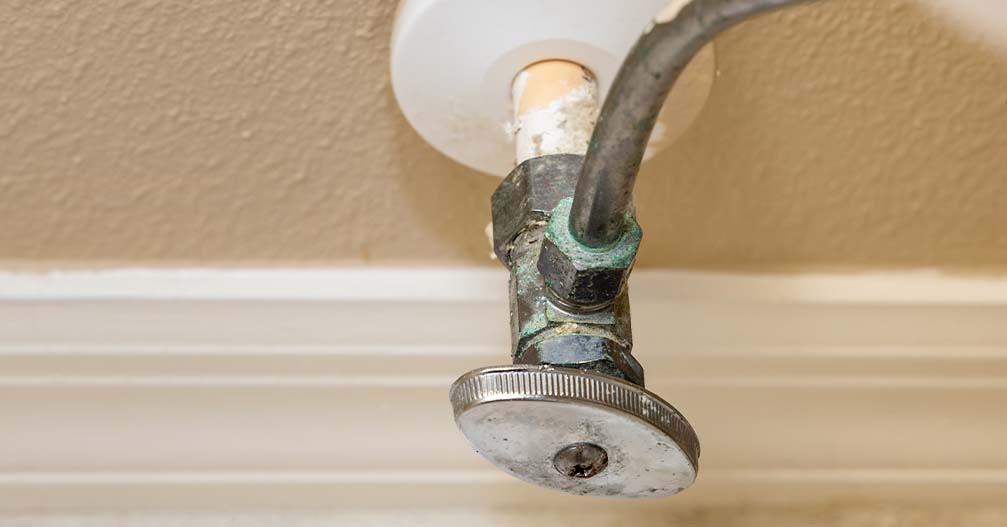
Tucked beneath your sink or behind your toilet is a small metal handle you probably haven’t touched in years. The shut-off valve (or fixture stop) is small, but it’s often the only thing standing between your home and an indoor wading pool.
Most Maryland homes still rely on older multi-turn valves that seal with internal rubber washers. Over time, mineral buildup locks the stem in place while the rubber washer degrades. When an unexpected leak hits and you finally crank that shut-off valve handle, it often freezes solid, snaps completely, or starts spraying water across your floor.
Pay attention to these four signs your valves need attention:
- “Green Crust” or Chalk: White mineral crust, rust, or green oxidation around the shut-off valve stem means water is already weeping past the seal.
- Frozen Stem: A healthy valve turns easily by hand; if you need pliers or excessive force, you risk snapping it clean off the pipe.
- Post-Turn Drip: If turning the shut-off valve handle causes water to seep from the packing nut, the internal gasket has already begun to fail.
- Age (10+ Years): If your valves date back to the late ’90s or early 2000s, they have outlived their reliable service life.
Modern Fixes
When Tuckers replaces outdated fixture stops, we upgrade them to more modern standards, such as using quarter-turn ball valves. A single 90-degree flick of the wrist creates an immediate, watertight seal–no degrading rubber washers, no endless cranking, and zero guesswork about whether the water is completely off.
So, don’t forget: your plumbing is a critical component of your whole-home comfort ecosystem. Before you face an unwanted plumbing surprise, let Tuckers’ master plumbing technicians inspect and upgrade your shut-off valves for complete peace of mind.